What is AI assisted writing? (and why it's not the same as AI generated)
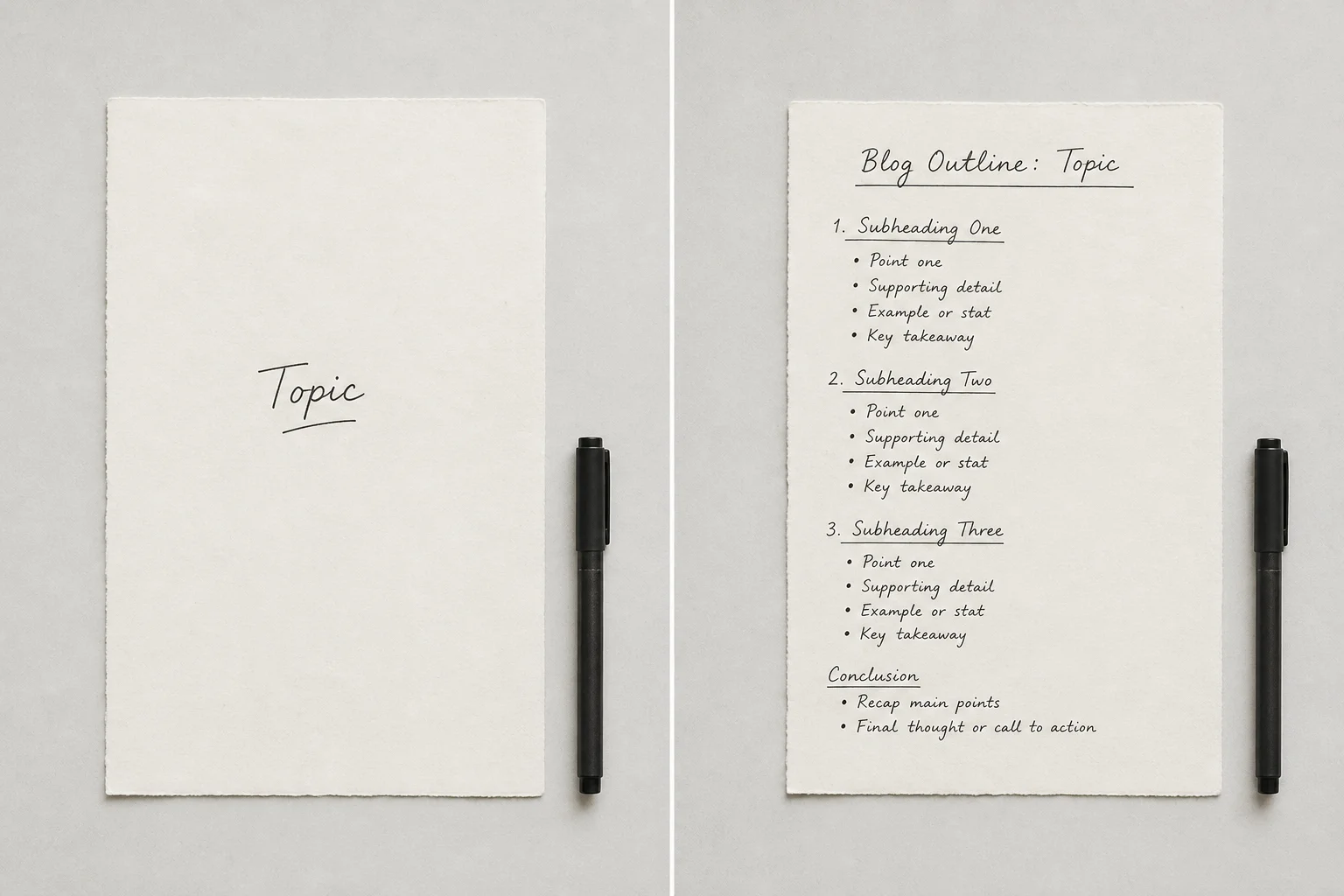
TL;DR: AI assisted writing means you stay the author while AI handles the work between your decisions-topic, angle, outline, and final edit remain yours. AI generated writing is prompt-and-publish with almost no steering, so the byline is hard to defend. The distinction matters for credibility, reader trust, and SEO: Google doesn't penalize AI, it penalizes empty, unoriginal content. A real assisted workflow keeps you in the author seat at every stage.
AI assisted writing and AI generated writing sound like the same thing. They are not, especially if your reputation depends on the words you publish. Coaches, consultants, therapists and freelancers are using AI tools like ChatGPT every day for their writing, just to then quietly wonder whether the output is really theirs to claim. That discomfort is worth paying attention to.
The distinction comes down to who was making the decisions. This guide breaks down what separates assisted from generated writing, why it changes both your ethics and your search rankings, and what a proper assisted writing workflow actually looks like in practice.
What AI assisted writing actually means
The one-sentence definition
AI assisted writing is when you stay the author and AI handles the work between your decisions. That one sentence is the line everyone has been dancing around.
Every meaningful choice still belongs to you: the topic, the angle, the structure, what stays and what gets cut. The AI fills the space between those choices. It researches, drafts, formats. All while you direct. That division of labour is what makes the byline honest.
Why this definition didn't exist until now
"AI writing" gets used to describe everything from a grammar suggestion to a fully generated article no human ever touched. That vagueness is convenient for tools selling you on speed, but it has created real confusion for anyone whose name sits above the content. Nobody drew the line clearly, so nobody knew which side they were on.
Here is what that looks like when you break it down:
- The human sets the topic and angle before any AI is involved
- The human approves or adjusts the outline before drafting begins
- The human reviews the draft and decides what to change
- The AI produces text but never publishes independently
- The writing profile reflects the author's voice, not a generic default
Tools like Skribt were built around this structure deliberately. The workflow exists to keep decision-making with the human at every stage, not to remove the human from the process entirely.
AI assisted vs AI generated: the real difference
The two terms sound similar. They describe completely different relationships between you and the text though.
What AI generated writing looks like
You open a chatbot. You type a prompt. You copy what comes back and hit publish. You made one decision, and that was writing the prompt. Everything after that belonged to the AI. At best, you were an editor. Often, not even that. The words carry your name but not much of your thinking.
What AI assisted writing looks like
You choose the topic. You set the angle. You review the brief and push back if it misses the point. You look at the outline and move things around. You read the draft and cut the parts that don't sound like you. The AI handles research, drafting and filling the structure so it isn't thin. But every fork in the road is a deliberate decision you took. That is why the byline is honest. The decisions were yours, so the piece is yours. A writing profile that reflects your voice makes that even clearer, because the AI is working inside your constraints, not its own defaults.
Why the distinction matters
Credibility: lying vs writing
Publishing AI-generated text under your name when you contributed nothing is a kind of a credibility problem in the long term. I know this is quite a blunt way to put it, but it is accurate. Coaches, consultants and therapists build trust on the strength of their thinking, and readers come to them because they want that person's perspective, not a language model's best guess at what that person would say. Using AI as a tool is a different thing entirely. A writer who uses a spellchecker is still the writer. A writer who uses AI to research and draft while they steer the structure, make every meaningful calls and add own textual nuances is still the writer. The byline is only dishonest when the decisions were not yours.
SEO: Google penalizes emptiness, not AI
Google has been clear that it does not penalize content for being written with AI. What it penalizes is content that has nothing original in it. Google's actual target is low-quality, unoriginal content published at scale, not AI involvement. Assisted writing has your angle, your structure and your editorial judgment baked in. Generated writing, where you prompt and publish without steering anything, tends to produce exactly what Google flags: thin content with no original point of view.
Reader trust: people can tell
Not always through AI detectors (who really uses those?) but mostly through tone. Generated text has a particular flatness to it, a way of covering ground without saying anything that feels true or specific. Readers who follow you because they value your voice will notice when it disappears. Assisted writing sounds like a person because a person was making the calls throughout. That is what keeps the voice intact, and it is what keeps readers coming back.
What AI assisted writing looks like in practice
The process has a clear shape. Some moments are yours, some belong to the AI. Knowing which is which is what keeps you in the author seat.
Step 1: topic and brief
You bring the idea. You decide what the post is about, what angle it takes and who it is for. That is not something you hand off. Once those parameters are set, the AI earns its place: it researches the landscape, looks at what is already ranking, and produces a brief for you to review. You read it, adjust anything that does not match your thinking and approve it. The brief becomes the contract for everything that follows, and you signed off on every line of it.
Step 2: outline and structure
With the brief approved, the AI proposes a structure. It suggests headings, orders the argument and flags any gaps in coverage based on what the research turned up. Your job is to read it critically. Does the order make sense for your audience? Is there a section that does not belong, or one that is missing entirely? You make those calls, adjust the outline and move on. The AI did the heavy lifting and you decided what the article actually becomes.
Step 3: draft and refine
The AI writes the draft against the outline you approved, working within whatever tone and formatting rules you have set. It also handles things like avoiding thin content and keeping the structure clean for search. Then you read it. You edit sections that do not sound right, sharpen the voice and make the final calls on what stays. The draft is a starting point you shaped from the first decision. The finished article reflects your judgment throughout.
Why ChatGPT isn't built for AI assisted writing
ChatGPT is a chatbot. It was built for conversation, not for structured content production. That matters when your goal is assisted writing, not generated writing.
What chatbots give you
You type a prompt, ChatGPT returns text. There is no brief, no outline approval, no thin content check and no workflow guiding you through decisions. You become the editor of something you did not steer, which puts you back in generated territory whether you intended that or not.
What a tool built for assisted writing gives you
Skribt runs research, outline, draft and polish in one structured sequence. You set a writing profile once covering your tone, formatting and citation style, and every article follows it. After the draft is ready, an editor and chat let you refine individual sections without losing the thread. You make the calls and the tool does the labour between them. The byline stays honest because the decisions stayed yours.
If that is the kind of writing you actually want to produce, you can start a free post on Skribt and see how the workflow feels from the first step.
Think of AI assisted writing not as a category you opt into by using a fancier tool, but more like a way of working. Your thinking leads. The AI fills in the labour between your decisions. When you prompt and publish without steering anything, the output is not yours. You were not in it.
The fix is you being the one making the calls. Topic, angle, outline, final edit. Do that, and the byline is honest.
Write posts like this in minutes
Skribt helps you create SEO-optimized blog posts with AI without losing your voice.
Try Skribt free